
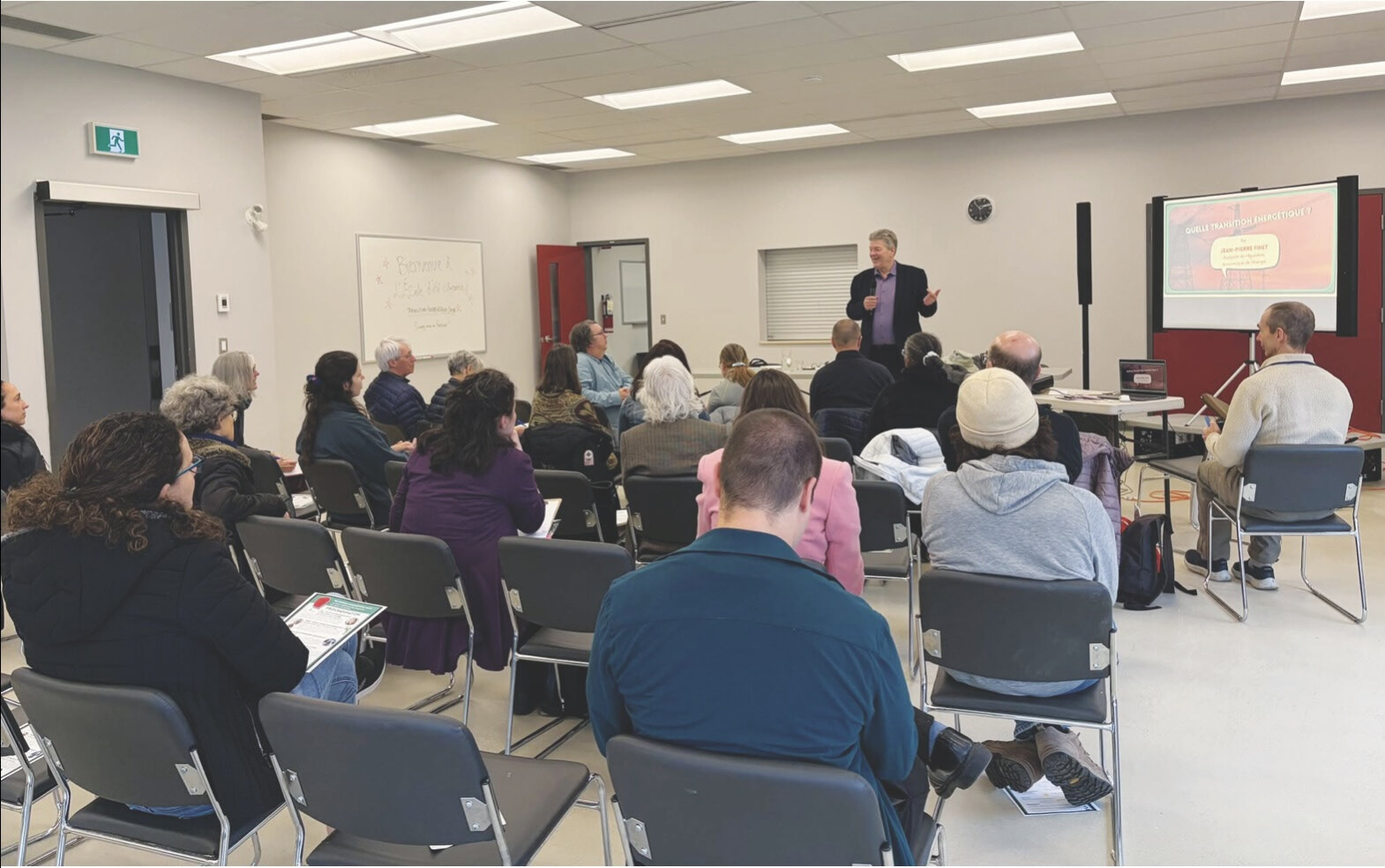
A panelist discusses the challenges of the energy transition with participants on November 7. Photo: École d’été citoyenne
The École d'été citoyenne holds a discussion on energy transition
Drazen Seslija and Petar Seslija
The energy transition sparked discussions on November 7 at the Val-Tétreau community centre, where residents gathered for an afternoon of information and discussion organized as part of the École d'été citoyenne (citizens’ summer school) project called Transition énergétique juste (fair energy transition).
The meeting provided an opportunity to address the challenges associated with energy production and consumption in Quebec, as well as their impact on communities and natural environments. Jean-Pierre Finet and Philippe Gauthier, from the Regroupement des organismes environnementaux en énergie, presented various energy issues, addressing both their political and environmental dimensions.
The proposed nuclear waste disposal facility in Chalk River, Ontario, and its potential impact on the territory of the Kebaowek First Nation were also part of the discussions. This time, the topic was presented by students from École primaire internationale du Mont-Bleu, who are also raising awareness about this issue among various groups at their school.
“It is an honour for us that the École citoyenne can raise awareness among younger generations about social and environmental issues like this one,” said project coordinator Noémie Lebrun. This participation also helped kickstart a longer-term partnership with the school.
Indigenous perspectives were also featured on the panel with the participation of Dr. Kristi Leora Gansworth, a doctoral student from the Kitigan Zibi Anishinabeg First Nation. She discussed the impact of energy production on natural resources and ecosystems, highlighting the importance of the American eel to her community.
For the École d'été citoyenne, these discussions aim to encourage local initiatives and community participation. “What motivates me is the positive impact the École d'été citoyenne can have on local communities and the potential it offers them to take action on the challenges our society is facing,” explains Noémie Lebrun.
The event brought together different groups around a shared discussion: how to envision an energy transition that takes into account people, territories, and the natural world.