
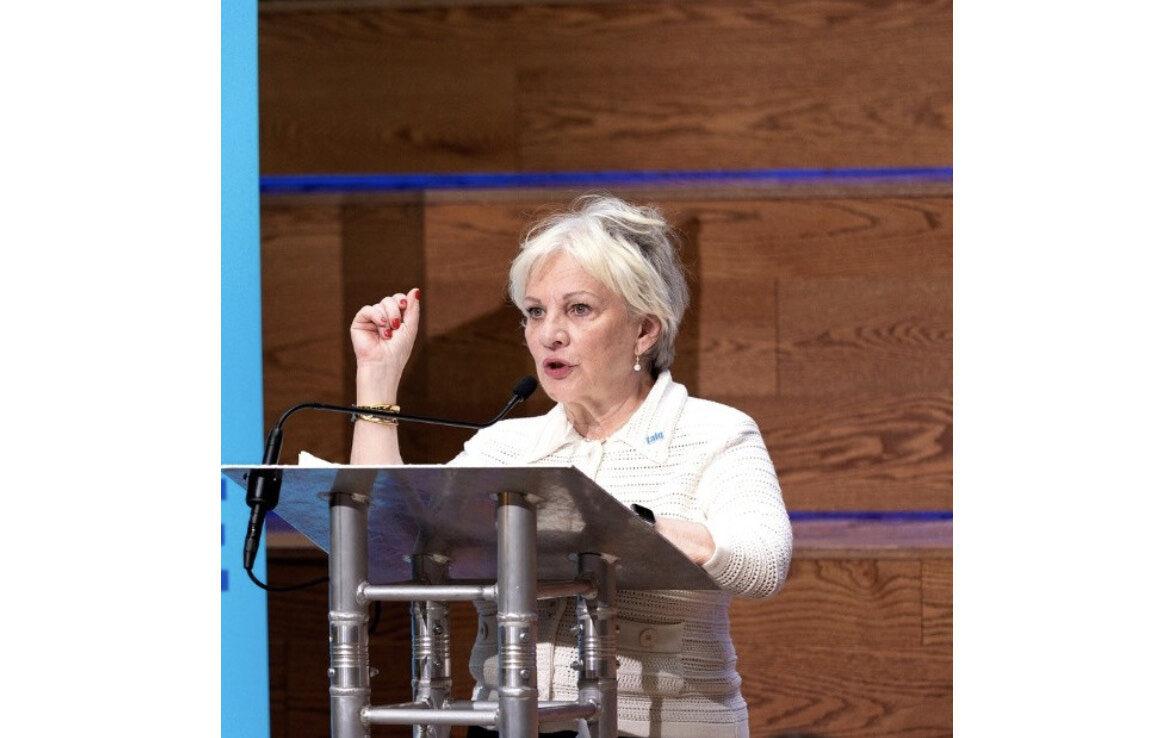
Sylvia Martin-Laforge, Director General of TALQ, says English-speaking Quebecers expect Canada’s next Commissioner of Official Languages to uphold their rights, understand their unique reality, and continue the outgoing commissioner’s work in promoting linguistic duality and federal accountability. Photo: Courtesy of TALQ’s Facebook page
TALQ director says new commissioner should focus on building trust
Tashi Farmilo
As the federal government moves forward with the nomination of Kelly Burke to become Canada’s next Commissioner of Official Languages, the head of a Quebec-based minority language advocacy group says English-speaking Quebecers are watching closely and hoping to be understood and respected within Canada’s evolving language framework.
Sylvia Martin-Laforge, Director General of TALQ, said her organization will be looking to the next Commissioner to continue building on the work of outgoing Commissioner Raymond Théberge, particularly when it comes to recognizing and defending Canada’s largest official language minority community.
“For the last couple of years, he’s been quite strong, fearless in his comments,” Martin-Laforge said of Théberge. “Even when outside of his direct jurisdiction, he really did try to explain that we’re not the best treated minority in the world.”
She expressed hope that Burke will carry that work forward while strengthening engagement with English-speaking Quebecers, a community whose rights, she noted, are not formally recognized under Quebec law.
Martin-Laforge emphasized that the Commissioner’s central role is to ensure federal institutions meet their obligations under the Official Languages Act. “We would hope that the Commissioner would really monitor that federal institutions take positive measures to enhance the vitality of the English-speaking community, support our development, and promote the full recognition of our status as a minority linguistic community,” she said.
She also raised concerns about proposals for federal language funds to be transferred directly to the Quebec government, bypassing institutions that serve English-speaking Quebecers. “The federal government sees us as an official language minority community. The provincial government does not recognize our status,” she said.
At the heart of her comments was a recognition of the unique tensions that exist around language in Quebec. Martin-Laforge acknowledged that while French is seen as an asset in most of Canada, in Quebec it carries the weight of cultural survival. “In Quebec, the English language can be perceived as a threat, a threat to the survival of French identity and nationality,” she said.
That perception, she explained, can strain relationships between communities. “The more fear that Francophones have around the loss of French, the more they fear us as a threat to their language. And the more they will be against us having rights. The relationship will not be one of equals. It will be permeated by fear.”
Still, Martin-Laforge said that protecting French and upholding the rights of English-speaking Quebecers are not mutually exclusive. She believes the Commissioner’s office plays a vital role in helping federal institutions navigate these realities and uphold Canada’s commitment to official language duality. “We’re still in Canada, the last time I looked,” she said.
TALQ, she added, will be paying close attention to Burke’s upcoming testimony before parliamentary committees. “We’ll be eager to see how she demonstrates her understanding of the unique challenges of the English-speaking community,” Martin-Laforge said. “We will be relying on the new Commissioner to understand us and to support the English-speaking community of Quebec, as an ombudsman, as a promoter of linguistic duality, and as someone who truly understands our unique set of circumstances.”