
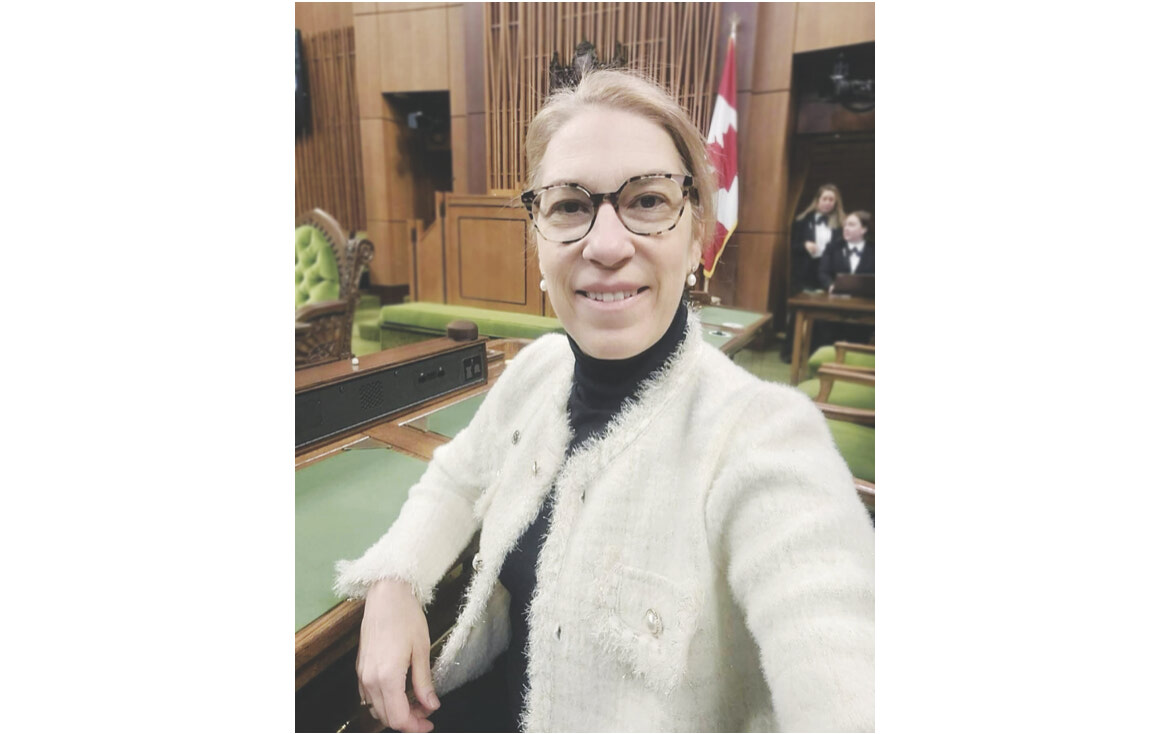
Sophie Chatel is backing a new federal affordability plan that includes direct payments to households and targeted support for farmers, aiming to ease food costs and strengthen local food systems in Pontiac–Kitigan Zibi and across Canada. Photo: Courtesy
Sophie Chatel applauds federal plan to ease grocery cost
Tashi Farmilo
Sophie Chatel is endorsing a new federal plan aimed at making life more affordable for Canadians, especially when it comes to rising food costs. She welcomed the government’s proposed Canada Groceries and Essentials Benefit, describing it as “real and immediate relief” for families and individuals feeling the pressure of inflation.
The announcement comes amid ongoing concern about affordability, particularly in rural areas like Pontiac–Kitigan Zibi, where food and transportation costs tend to be higher. “Each week, I hear directly from residents struggling to put food on the table,” said Chatel. “These measures are going to help thousands of households right here in our community.”
The Canada Groceries and Essentials Benefit is designed to replace and expand on the existing GST Credit. If passed by Parliament, it would deliver $11.7 billion in additional aid over six years to more than 12 million Canadians with low or modest incomes. A one-time lump-sum top-up will be issued no later than June 2026, followed by increased quarterly payments starting in July of the same year.
Under the proposed plan, a single adult could receive up to $950 during the 2026–27 benefit year. A family of four could receive as much as $1,890. These figures include both the one-time top-up and a 25% enhancement to the annual benefit, indexed to inflation. No separate application is required to receive the payments, though recipients must file their 2024 and 2025 tax returns to be eligible.
Chatel emphasized that this support will particularly benefit seniors, single parents, and working families in her riding. In addition to direct payments, she highlighted federal investments to shore up food supply chains and support local producers, including a $500 million strategic fund for businesses and $150 million for food security initiatives.
“Helping our farmers and food banks is just as critical as helping households,” Chatel said. “We’re investing in a more resilient, locally anchored food system that benefits everyone in our region.” On her social media account, Chatel added, "I also welcome the direct support announced for our farmers and processors. Let us not forget that they are the ones who put food on our tables." By highlighting the agricultural sector, she underscored that affordability isn’t just about relief at the checkout counter, it’s also about investing in the people and systems that make affordable food possible. Long-term solutions, she suggested, depend on strengthening Canada’s capacity to grow, process, and distribute food locally, ensuring communities remain resilient.
A further $20 million will be allocated to food banks across the country through the Local Food Infrastructure Fund, a response Chatel says addresses “urgent, growing needs” in communities already strained by high demand.
The legislation enabling the new benefit is expected to be introduced in Parliament, and if passed after receiving royal assent the first payments would be issued in spring 2026.
“By making life more affordable and investing in a more resilient economy, we are sending a clear message: no one should be left behind.”