
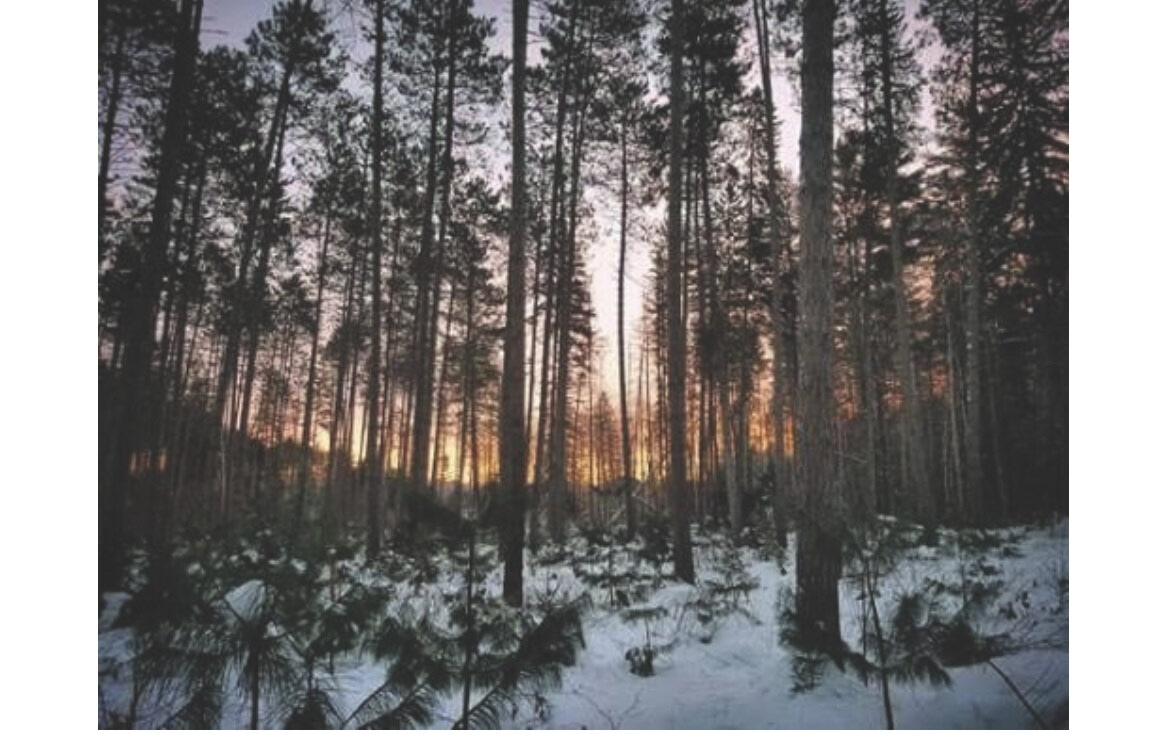
Quebec is asking Outaouais residents to comment by December 11 on plans for logging, replanting, road building and budworm salvage in public forests, giving people who use the land a chance to change where and how the work is done. Photo: Courtesy of the Government of Canada
Quebec seeks residents’ input on Outaouais forest cutting and road plans
Tashi Farmilo
Plans for logging, replanting and road building on public forest land in the Outaouais and part of neighbouring Abitibi-Témiscamingue are open for public comment until December 11. Quebec’s Ministry of Natural Resources and Forests is asking the people who use that land to help decide where and how the work will be done.
The consultation opened November 10 and covers six forest management units, the blocks of public land the province uses to plan harvesting. Most of the work is planned in the Pontiac, Collines-de-l’Outaouais, Vallée-de-la-Gatineau and Papineau regional county municipalities.
Two of the units are in the Coulonge sector of the Pontiac, one is in the lower Lièvre valley and three are in the upper Gatineau and Cabonga area. Two of the northern units also reach into the Vallée-de-l’Or regional county municipality in Abitibi-Témiscamingue, and one of them runs along Route 117 through part of the La Vérendrye wildlife reserve.
Maps for each unit show sectors where crews could cut timber, ready and replant sites, and build or improve multi-use roads over the next few years. In the two northern units, the ministry also proposes to recover timber damaged by the spruce budworm, a native moth whose caterpillars strip balsam fir and spruce of their needles. The consultation also covers the Sicotte teaching and research forest, about 1,230 hectares in the former Sicotte township around Grand-Remous. It has been reserved since 1990 for practical forestry training and field research and is run by the Centre de services scolaire des Hautes-Laurentides in Mont-Laurier. Two plans for that forest are under review: one for near-term work and a longer-range one that sets its management goals through 2031.
According to the ministry, the consultations are meant to give residents a say in forest decisions and to weigh the competing interests of everyone who uses public forests. People who know a territory can flag what planners’ maps miss, and their comments can reshape the plans. The ministry’s examples include shifting the boundary of a cut to spare a view or a drinking water supply, moving a road so the territory can serve more than one use, leaving trees standing along a recreational trail and keeping trails intact during replanting. It puts the number of such adjustments at more than 1,000 a year across Quebec.
Once the comment period closes, ministry staff review each submission, follow up with anyone whose concern needs clarifying and work out changes where they can. Indigenous communities are consulted separately. Complaints about work schedules, log hauling or road maintenance go to the forestry companies, which are responsible for those matters. Any changes the ministry agrees to are written into the plans before companies get permission to start, and operators who ignore them can be penalized. The ministry then publishes a follow-up report listing the concerns raised and how it plans to address each one. The public comment period on these forest plans is limited to where and how specific work will be done, so it can’t revisit how the government has designated public land, the goals of Quebec’s sustainable forest management strategy or forest rights that have already been granted.
The plans can be viewed and commented on through an interactive map at Québec.ca/consultations-forêt-outaouais. Comments on the longer-range Sicotte plan can be sent by email to Consultationpafi-outaouais@mrnf.gouv.qc.ca until December 24.